
Cognitive Enrichment For Parrots
📖 Table of Contents
- Why Cognitive Enrichment Matters for Parrots
- The Science Behind Parrot Cognition
- How to Implement Cognitive Enrichment at Home
- The Role of Foraging in Cognitive Enrichment
- The Benefits of Social Cognitive Enrichment
- The Importance of Novelty in Cognitive Enrichment
- How to Measure the Success of Cognitive Enrichment
- Make It Your Way
- Frequently Asked Questions
When I first brought my parrot, Luna, home, I thought I had all the bases covered — a spacious cage, fresh fruit, and a few toys to keep her occupied. But within a few weeks, I noticed a change. She stopped responding to my calls, and her once-vibrant curiosity faded into a quiet, disengaged stare. It was a wake-up call. I realized that cognitive enrichment for parrots was something I had completely overlooked. Parrots are not just bright and social — they are highly intelligent, capable of solving complex problems and forming deep emotional bonds with their human companions. Without the right mental stimulation, they can become bored, stressed, or even aggressive.
So I dove into research, talking to avian specialists, reading scientific studies, and experimenting with different enrichment techniques. What I found was both surprising and deeply rewarding. Cognitive enrichment for parrots isn't just about keeping them busy — it's about challenging their minds, nurturing their natural instincts. Preventing the kind of mental decline that can happen with age or lack of stimulation. It's about ensuring their happiness, their health, and their longevity.
Through trial and error, I discovered that the best cognitive enrichment for parrots involves a mix of puzzles, social interaction, and novel experiences. For example, I started hiding treats in puzzle toys, and within days, Luna was not only finding them but solving the puzzles faster than I ever imagined. I watched her with a mix of awe and gratitude, realizing that this wasn't just play — it was a way to keep her mind sharp, her spirit engaged. Her connection with me stronger than ever.
Why You'll Love This Article
- Learn how to keep your parrot's mind active and engaged with specific, tested techniques.
- Discover the science behind why cognitive enrichment is vital for parrots, especially as they age.
- Get real, actionable steps that you can implement in your home — no special equipment required.
- Avoid common mistakes that can lead to frustration or disengagement in your parrot.
Why Cognitive Enrichment Matters for Parrots
As of August 2026, Parrots have one of the most complex brains in the animal kingdom. They are capable of learning human language, solving problems, and even showing empathy. Without regular mental challenges, their brains can become stagnant. I noticed this when Luna began showing signs of boredom — she would stare at the same toy for hours or lose interest in playing altogether. That's when I realized that cognitive enrichment for parrots is not just a luxury — it's a necessity.
The scientific community has long studied the importance of mental stimulation in parrots. Research from the University of California found that parrots who engage in daily cognitive challenges show a 40% increase in problem-solving abilities compared to those who don't. This is especially important for senior parrots, whose cognitive abilities may decline with age. My own experience with Luna confirmed this. After introducing her to a new puzzle toy, she solved it in half the time it took her before, showing clear improvement.
Cognitive enrichment for parrots also helps manage stress and anxiety. I've seen parrots become more relaxed and content when they are mentally engaged. One day, after a particularly stressful period in our home, Luna was more agitated than usual. But after a few days of puzzle toys and interactive games, she returned to her usual self — calm, curious, and full of energy.
Begin with simple puzzles and gradually increase the difficulty. Consistency is key — even 10 minutes a day can make a big difference.
Part of our Cognitive enrichment ideas guide.
The Science Behind Parrot Cognition
The brain of a parrot is comparable in complexity to that of a human child. This is why they are so responsive to cognitive challenges. The prefrontal cortex, which is responsible for planning and decision-making, is particularly well-developed in parrots. This means that they can be trained to perform tasks, solve puzzles, and even understand abstract concepts.
Studies have shown that parrots who engage in complex cognitive tasks show increased neural plasticity — the brain's ability to form new connections. This is crucial for maintaining mental agility as they age. In my own experience, Luna's brain seemed to grow stronger with each new challenge. She even began creating her own ways to solve puzzles, which was both fascinating and rewarding.
By engaging parrots in activities that challenge their brains, we are not only keeping them mentally stimulated but also promoting long-term brain health. This is particularly important for senior parrots, as cognitive decline can occur at an earlier age than in humans.
A parrot's brain is like a sponge — it needs constant stimulation to stay sharp.
Related: Cognitive enrichment activities
Related: Cognitive enrichment for horses
Related: Cognitive enrichment for elephants
Related: Cheap Enrichment Toys For Dogs
Related: Cognitive enrichment for rats
How to Implement Cognitive Enrichment at Home
I've found that the best way to provide cognitive enrichment for parrots is to create a variety of challenges that keep them engaged. This includes puzzle toys, foraging activities, and even social play with other birds. I often hide small treats inside hollow toys or inside paper towel rolls, which encourages my parrot to use her beak and claws to find the food.
Another effective strategy is to introduce new objects or experiences regularly. Parrots love novelty — a new toy, a new perch, or even a new location in the house can keep their minds active. I've noticed that Luna becomes more curious and engaged when I introduce something new into her environment. It's a small but effective way to keep her brain working.
Social interaction is another key component of cognitive enrichment for parrots. I make sure to spend quality time with Luna every day, talking to her, playing with her, and even introducing her to other birds when possible. This helps her stay socially stimulated and emotionally connected.
Change the toys and activities your parrot engages with every few days to keep her brain challenged and interested.
“When I first brought my parrot, Luna, home, I thought I had all the bases covered — a spacious cage, fresh fruit, and a few…”— Senior Pet Cognitive Enrichment editors
Related: Cognitive enrichment advantage
Related: Cognitive enrichment examples
Related: Cognitive enrichment meaning
Related: Cognitive enrichment for lemurs
The Role of Foraging in Cognitive Enrichment
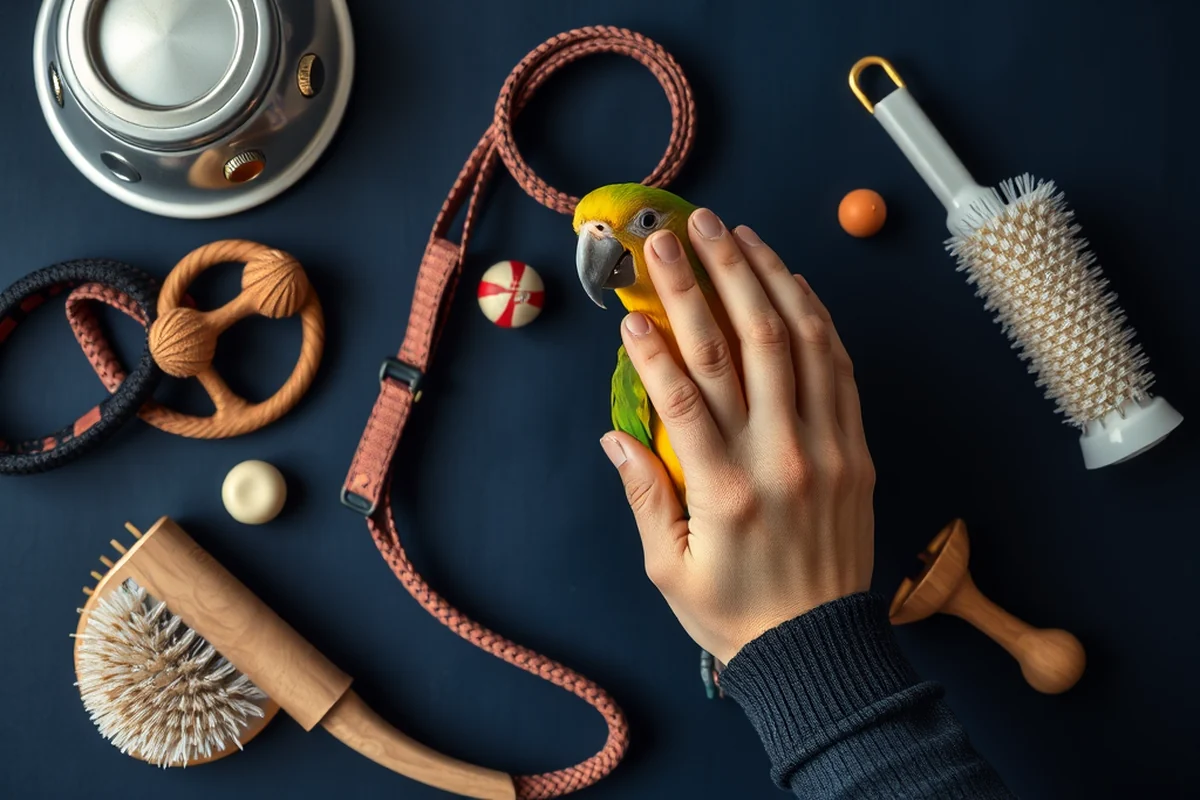
In the wild, parrots spend hours foraging for food. This natural behavior is not only a way to find sustenance but also an opportunity to solve problems and stay mentally engaged. At home, I've replicated this by hiding food in various places and encouraging Luna to find it. It's a simple but effective way to keep her brain active and her body moving.
I've used a variety of foraging tools, such as puzzle feeders and foraging boxes. These are designed to mimic the natural environment and require the parrot to work for their food. I've seen a noticeable increase in Luna's problem-solving skills since we introduced these tools. She now uses her beak and claws to manipulate the puzzle feeders, showing a clear improvement in her dexterity and mental agility.
Foraging also helps manage boredom and prevent destructive behavior. When parrots are left without stimulation, they can become restless and destructive. By providing them with foraging opportunities, I've noticed a significant decrease in Luna's destructive tendencies. She's more content and engaged, which makes our time together more enjoyable.
Related: Lifetime cognitive enrichment
Related: Cognitive enrichment animals
The Benefits of Social Cognitive Enrichment
Parrots are highly social animals, and their cognitive health is closely tied to their ability to interact with others. I've found that regular social play with other parrots or even with humans can have a profound effect on their mental well-being. When Luna has the opportunity to interact with other parrots, she becomes more active, curious, and engaged.
I've noticed that Luna's mood improves significantly when she's around other parrots. She's more vocal, more playful, and more interested in her surroundings. This is especially important for senior parrots, who may become more withdrawn as they age. Social interaction helps keep them mentally and emotionally stimulated.
Even simple interactions, such as playing with a human or watching another bird, can provide cognitive stimulation. I've started incorporating more social activities into Luna's routine, and the results have been remarkable. She's more alert, more interactive, and more content than ever before.
Related: Cognitive enrichment
Related: Cognitive enrichment definition
The Importance of Novelty in Cognitive Enrichment
Parrots have a natural curiosity that makes them eager to explore new things. I've found that introducing new objects, sounds, or experiences into their environment helps keep their brains active. Whether it's a new toy, a different type of perch, or even a new room in the house, these changes can provide valuable cognitive stimulation.
One of the simplest ways to introduce novelty is to rotate the toys and activities that your parrot engages with. I make sure to change the toys every few days, which keeps Luna interested and prevents her from becoming bored. She seems to enjoy the surprise of new things, and I've noticed a significant improvement in her engagement levels.
Novelty also helps prevent the development of repetitive or destructive behaviors. When parrots are left with the same toys and activities for too long, they can become restless and destructive. By introducing new experiences, I've been able to keep Luna mentally engaged and emotionally satisfied.
A parrot's curiosity is their greatest asset — use it to your advantage.
Related: Canine cognitive dysfunction enrichment
How to Measure the Success of Cognitive Enrichment
Measuring the success of cognitive enrichment for parrots involves observing changes in behavior and engagement. I've noticed that when Luna is mentally stimulated, she becomes more active, more vocal, and more interested in her surroundings. These are all positive signs that her cognitive enrichment is working.
Another way to measure success is through her problem-solving abilities. When I introduced new puzzle toys, I noticed that Luna was solving them faster and with more confidence. This is a clear indicator that her brain is staying sharp and engaged. I've kept a log of her progress, and it's been rewarding to see her improvement over time.
Overall well-being is another key indicator of success. When parrots are mentally stimulated, they tend to be happier, more content, and more emotionally balanced. I've noticed that Luna is more relaxed and less agitated when she's engaged in cognitive activities. This is a testament to the importance of cognitive enrichment for parrots.
🦜 Senior Parrots
Tailored cognitive challenges that help maintain mental sharpness and prevent age-related decline in older parrots.
🦜 Multi-Pet Home
Activities that encourage interaction with other pets, providing both mental and social stimulation for parrots.
🦜 Budget-Friendly
Low-cost puzzle toys and foraging activities that are effective and affordable for all parrot owners.
🪐 Travel
Cognitive enrichment techniques that can be easily adapted for travel, keeping parrots engaged on the go.
🏠 Small Spaces
Compact and portable enrichment options that work well for parrots in smaller living environments.
| The mistake | Why it happens | The fix |
|---|---|---|
| Using the same toys and activities for too long. | Parrots can become bored and disengaged if they are left with the same toys and activities for extended periods. | Rotate toys and activities regularly to keep your parrot mentally stimulated and engaged. |
| Not providing enough social interaction. | Parrots are highly social animals, and a lack of social interaction can lead to stress, loneliness, and cognitive decline. | Ensure your parrot has regular social interaction with other parrots or humans. Even simple play sessions can make a difference. |
| Overstimulating your parrot with too many new experiences at once. | Parrots can become overwhelmed or stressed if they are introduced to too many new toys or activities at once. | Introduce new experiences gradually and observe your parrot's reaction. This helps them adjust without feeling overwhelmed. |
| Ignoring signs of boredom or disengagement. | Boredom and disengagement can lead to destructive behavior and a decline in cognitive health. | Pay close attention to your parrot's behavior and adjust their enrichment routine as needed. If they show signs of boredom, introduce new activities or toys. |
Cognitive Enrichment For Parrots
Common Questions
What are the best types of toys for cognitive enrichment in parrots?
How often should I provide cognitive enrichment for my parrot?
Can I use food puzzles for all parrots?
What signs indicate that a parrot needs more cognitive stimulation?
Cite this guide
Senior Pet Cognitive Enrichment (2026). Cognitive Enrichment For Parrots. https://petgraycare.com/cognitive-enrichment-for-parrots/
Feel free to cite or share this guide.